
 by Canton
March 10, 2026
by Canton
March 10, 2026
Built-In Monetization Model at L1 Protocol Level
If you issue tokenized assets or build onchain apps, there’s a structural gap most networks overlook: once your asset is live, you’re not directly compensated for the utility it brings to the ecosystem.
On most other L1s, tokenized securities issuers and application providers don’t participate in the economics of the network. Issuance, transfers, and settlement generate fees - but those fees are burned or paid to validators only. Even if activity increases, the issuer’s or application provider’s revenue does not.
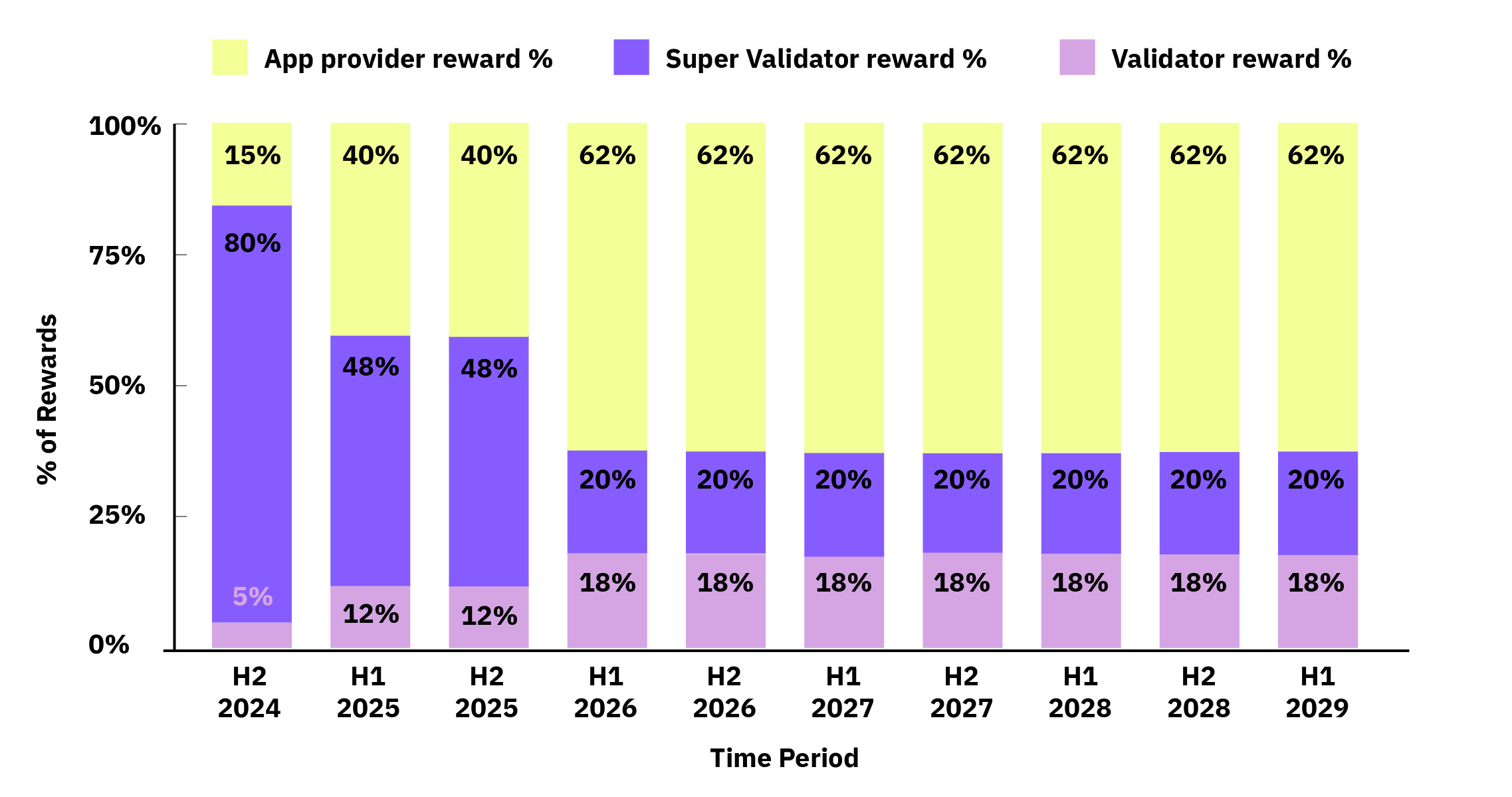
Canton changes the economics. Transaction fees are redistributed to miners (SVs), apps, users, and a development fund. When tokenized securities are issued and actively used, each transaction contributes to app rewards. Traffic fees are burned, and today, 62%¹ of all Canton Coin rewards can be minted by featured apps, or the assets brought to Canton via such apps, based on the transactions they drive or are used in.
That means distribution, trading, and settlement are no longer just operational processes - they become revenue-generating activities. Issuers benefit from a predictable, continuous transaction-based revenue stream that scales with real onchain usage and enables long-term business planning.
Bottom line: on Canton, you earn rewards with every transaction, giving you a built-in, transaction-based earnings model that scales and grows with the network.
Evolution of Cantonomics
Early network adoption
During the network’s early phases, Canton’s tokenomics were designed to bootstrap real activity and usage. At the beginning, rewards minted outpaced fees burned, creating strong incentives for adoption. The higher rewards allowed application builders to absorb transaction costs on behalf of users, lowering friction and clearly demonstrating their application’s value. Builders could also pass through rewards as rebates to end users, keeping end users’ costs low while incentivizing app adoption.
Maturing network towards BME
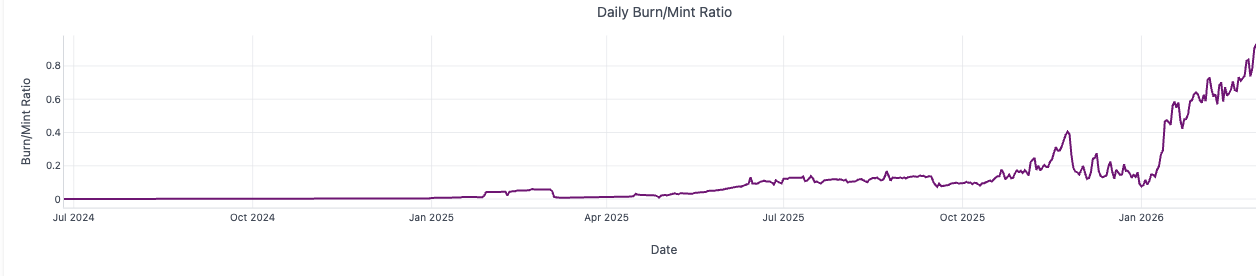
The network’s tokenomics employs a burn-and-mint equilibrium mechanism designed to create a self-balancing system focused on long-term stability - aligning Canton Coin with real network utility. As the network matures and transactional activity grows, this thesis is starting to prove out.
Fig. 1 highlights the network trending ever closer towards Burn-Mint Equilibrium (BME). Application rewards are now primarily driven by real transaction fees paid by end users who are deriving utility from those applications. At equilibrium, the value of tokens burned as fees for network activity is equal to the value of tokens minted into supply (by validators, apps/assets and service providers enabling that activity).
The Utility Shift
As of mid Jan 2026, the total mintable supply of CC rewards halved, while the allocation of rewards to application builders increased to 62%¹ for the next 3.5 years.
Your Revenue Model as an App Builder
Sustainable Rewards
On Canton, app rewards are directly linked to real utility and fees that your app generates on the network, rather than fixed emissions or short-term incentives. This tokenomics design ensures continuous, fair and balanced upside aligned with network activity growth.
At the same time, it helps protect builders from dilution during weaker market conditions. Compared to other networks, application providers and issuers on Canton can consider rewards as a more predictable component of their revenue model as opposed to speculative upside - enabling long-term strategic planning.
Revenue Model
The components of your revenue model on Canton consist of:
- App rewards: CC rewards you can mint based on your app’s proportion of overall network traffic per round, and up to a max cap of $1.50 per transaction.
- Traffic fees: fees paid when users transact via your app - can be covered by you, or passed onto users. If the application provider pays for the traffic fee in a transaction, they get back 20% of the traffic fee paid (as part of the validator rewards pool).
Passing Fees through to Users
As we enter a more mature phase of the network, with rapidly increasing utility, it is a natural evolution for applications that deliver meaningful value to pass some or all traffic fees through to their users in some way. Fees passed to clients reflect the additional value provided by applications on Canton - such as enhanced privacy, liquidity, execution, etc - and at the same time support sustainable, transaction-linked rewards for builders.
Depending on the app provider’s revenue model and the extent to which they pass through traffic costs to end users, apps can earn up to 170%¹ of application-generated traffic fees in app rewards.
Estimating your Rewards
Fig 2. provides a simple chart to estimate potential monthly app rewards earnings based on your share of a hypothetical monthly network throughput of around 40M network transactions per month (i.e. 15 TPS).
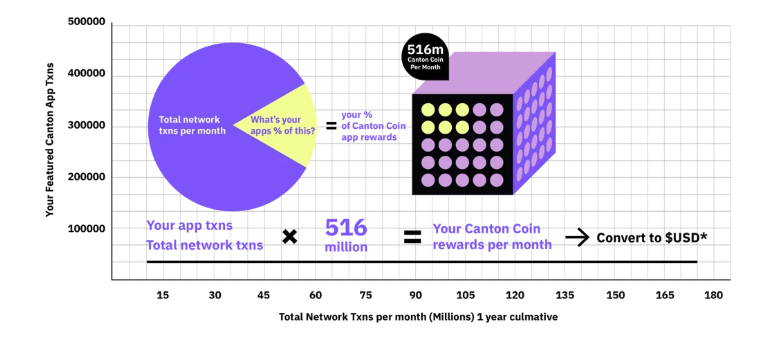
Figure 3: Canton Network featured app rewards calculation matrix
So if:
A = Your app transactions per month
B = Total network transactions month (40M per month, based on ~15 TPS avg.)
C = Monthly app rewards available (~516M CC)
D = Onchain conversion rate (see: canton.thetie.io/ )
Then (A ÷ B) × (C × D) = Your monthly app rewards (USD)
Worked Example
If your app transactions in the month of Jan was 100K
And the total transactions on the network in Jan were 40M
The monthly mintable app rewards in Canton Coin are 516M CC
We will assume an on-chain conversion rate for Canton Coin of: $0.15
Then your app rewards for month of Jan in USD terms would be:
(100K ÷ 40M) × (516M × 0.15) = $193.5K
Constraint
- This formula applies only when (C × D) ÷ B < $1.5 (Reward per transaction < $1.5)
- If (C × D) ÷ B > $1.5, then Reward = A × $1.5 (Max cap at $1.5 reward per transaction)
Ready to Start Building on Canton Network?
____________________________________________________________________________________________________________________
¹62% does not include deductions from the grants program, learn more here
²170% represents maximum potential app rewards, assuming:
- the max $1.50 app rewards is reached
- the application provider receives $0.20 for paying for traffic fees
- Application provider passes through the $1 traffic fees cost to end user as part of their pricing model layered on top of Cantonomic’s mechanism
Stay connected with Canton. Subscribe to our newsletter.
Sign me up
